14 September 2026
A guide to driving in Portugal: tolls, rentals and scenic roads
Practical advice on navigating Portuguese motorways, managing electronic tolls and choosing scenic routes through the Alentejo and beyond.
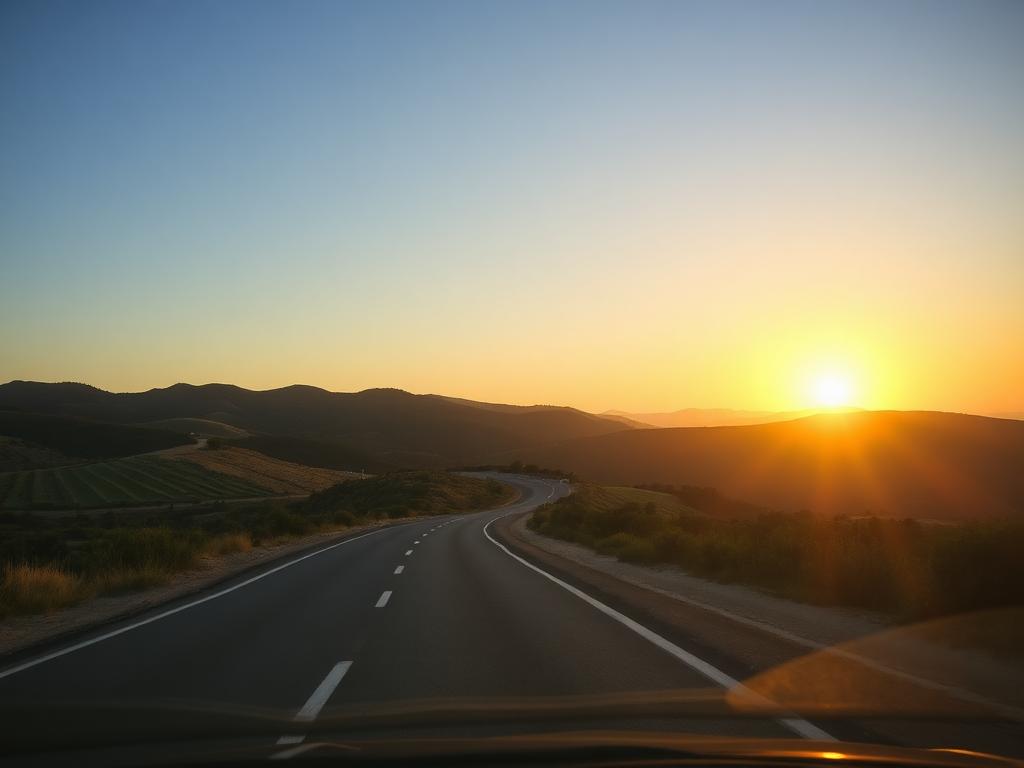
Driving in Portugal is the most effective way to reach the rural interior, particularly here in the Alentejo where public transport between smaller villages is limited. While the motorway network is modern and well-maintained, the logistics of tolls and the local driving culture require some preparation. We have compiled these observations from our daily lives here to help you navigate the roads safely and efficiently.
Understanding the toll system
Portugal has two distinct types of toll roads. The first is the traditional plaza system, where you take a ticket upon entry and pay a collector or a machine when you exit. These systems usually accept cash or debit cards. The second, and more complex for visitors, is the electronic-only toll system, often found on former 'SCUT' motorways like the A22 in the Algarve or the A25 in the north. There are no booths on these roads; overhead gantries record your number plate as you drive through.
For those hiring a car, the simplest solution is to ensure your vehicle is fitted with a Via Verde transponder. This small device sits behind the rearview mirror and allows you to pass through the marked 'V' lanes at toll plazas without stopping. The charges are then billed directly to the credit card linked to your rental agreement. Most rental companies charge a small daily fee for the use of the device, usually capped at a certain amount for the duration of the rental. We recommend this option as it removes the need to visit CTT post offices to pay for electronic tolls after the fact, which can be a bureaucratic burden during a holiday.
Car rentals and insurance
When collecting a car at Lisbon or Faro airports, it is worth inspecting the vehicle thoroughly. Minor scratches are common, and ensuring these are documented before you leave the lot prevents disputes later. We suggest opting for a smaller car if you plan to visit historic hilltop villages. The streets in places like Monsaraz or Évora were built for carts and horses; wide SUVs often find themselves stuck or unable to navigate tight corners.
Basic insurance typically carries a high excess, which can be several hundred or even thousands of euros. You can reduce this through the rental company's own premium cover or via a third-party excess insurance policy. If you choose the latter, be aware that the rental company will still hold the full excess amount on your credit card as a deposit. Ensure your card has a sufficient limit to accommodate this hold.
Rules of the road and safety
Portuguese traffic laws are standard for the European Union, but there are nuances to observe. Traffic entering a roundabout always has the right of way unless signs indicate otherwise. However, there is a specific rule regarding lanes: if you are not taking the first immediate exit, you should occupy the inner lane of the roundabout and only move to the outer lane after you have passed the exit prior to the one you want. Police do monitor this and can issue fines for incorrect lane usage.
Speed limits are generally 120km/h on motorways, 90km/h on main roads, and 50km/h within built-up areas. It is common to see local drivers trailing closely behind your vehicle; in these instances, it is best to maintain your speed and allow them to overtake when it is safe. We carry our identification, driving licence, and rental documents at all times, as spot checks by the GNR (Guarda Nacional Republicana) are a regular occurrence on rural roads.
Scenic routes worth the detour
While the motorways are efficient for crossing the country, the national roads (designated by N or EN) offer a slower, more rewarding experience. In the Alentejo, the N2 is a significant route that bisects the country from north to south. The section through our region passes through rolling plains and cork oak forests, connecting historic towns without the monotony of the motorway.
Another road we often recommend is the N247, which follows the coastline between Cascais and Sintra, offering views of the Atlantic and the cliffs of Cabo da Roca. In the north, the N222 follows the Douro River from Peso da Régua towards Pinhão. This road is frequently cited as one of the most beautiful drives in the world due to the terraced vineyards that rise sharply from the water's edge.
Practicalities for the journey
Fuel stations are plentiful along motorways and near major towns. Many are self-service, where you fill the tank first and pay inside. On the motorways, service areas are well-equipped with clean facilities and cafes serving espresso and sandwiches. If you are driving an electric vehicle, the Mobi.E network is the primary charging infrastructure. You will need a compatible app or card to access these chargers, as many do not accept direct contactless payment.
- Always carry a spare pair of glasses if you require them for driving, as this is a legal requirement.
- Reflective jackets and a warning triangle must be present in the car; check that your rental company has provided these in the boot.
- Using a mobile phone while driving is strictly prohibited unless you have a hands-free system.
- Drink-driving laws are strict, with a legal limit of 0.5g/l, which is lower than in the UK.
Driving in Portugal is rarely stressful if you avoid the rush hours in Lisbon and Porto. Once you reach the rural roads of the Alentejo or the mountain passes of the Serra da Estrela, the traffic thins, and the pace of life slows. Taking the time to use the national roads instead of the motorways allows you to see the transition of the landscape and stumble upon small village cafes that you would otherwise miss.
Planning a trip to Portugal?
Build a route in a few minutes with our free trip planner, or read the full seven-day itinerary.